BLOG CATEGORY: Heating Systems / In-Floor Heating
SEO TITLE: In-Floor Hydronic Heating Calgary: Is It Worth It?
META DESCRIPTION: Thinking about in-floor heating for your Calgary home? Learn how hydronic radiant systems work, what they cost, and when they make sense. ER Plumbing & Heating explains.
PRIMARY KEYWORD: in-floor heating Calgary
SECONDARY KEYWORDS: hydronic heating Calgary, radiant floor heating Calgary, in-floor heating cost Calgary, Navien boiler Calgary, heated floors Calgary
In-Floor Hydronic Heating in Calgary: What It Is, What It Costs, and Whether It's Worth It
Step onto a heated floor on a January morning in Calgary and the decision makes itself. There's no blast of dry forced air, no cold tile shock underfoot, no blower noise cutting through the silence — just steady, even warmth rising from the ground up. It's the kind of comfort that's hard to explain until you've lived with it.
But in-floor hydronic heating is a serious investment, and Calgary homeowners deserve real answers before committing to a system that means opening up floors, installing boilers, and routing PEX tubing throughout a home. How does it actually work? What does it cost? When does it make sense — and when doesn't it? This guide covers everything you need to know.
What Is In-Floor Hydronic Heating?
Hydronic in-floor heating — also called radiant floor heating — works by circulating hot water through a network of flexible PEX tubing embedded beneath your floor surface. That tubing connects back to a boiler, which heats the water to a controlled temperature. As the warm water flows through the loops, heat radiates upward through the floor and into the room above.
Unlike forced-air systems that heat a space by blowing warm air through ducts and registers, radiant heating works from the ground up. It warms objects and people directly, rather than just the air — the result being a more consistent, comfortable temperature throughout the room with no cold spots, no drafts, and no noise.
Most modern hydronic systems are divided into zones, each controlled independently. That means you can heat your basement development without cranking up the whole house, or keep a bathroom floor warm at a separate thermostat from the living room. Zone control is one of the strongest reasons hydronic heating is growing in popularity across Calgary new builds and renovations alike.
How a Hydronic System Is Installed
In-floor hydronic heating is a multi-trade installation — it requires a licensed gas fitter for the boiler and a licensed plumber for the piping. Ideally, the rough-in happens before concrete is poured or subfloor goes down, which is why planning at the renovation or build stage is critical.
Here's what a professional installation looks like from start to finish:
The Mechanical Room
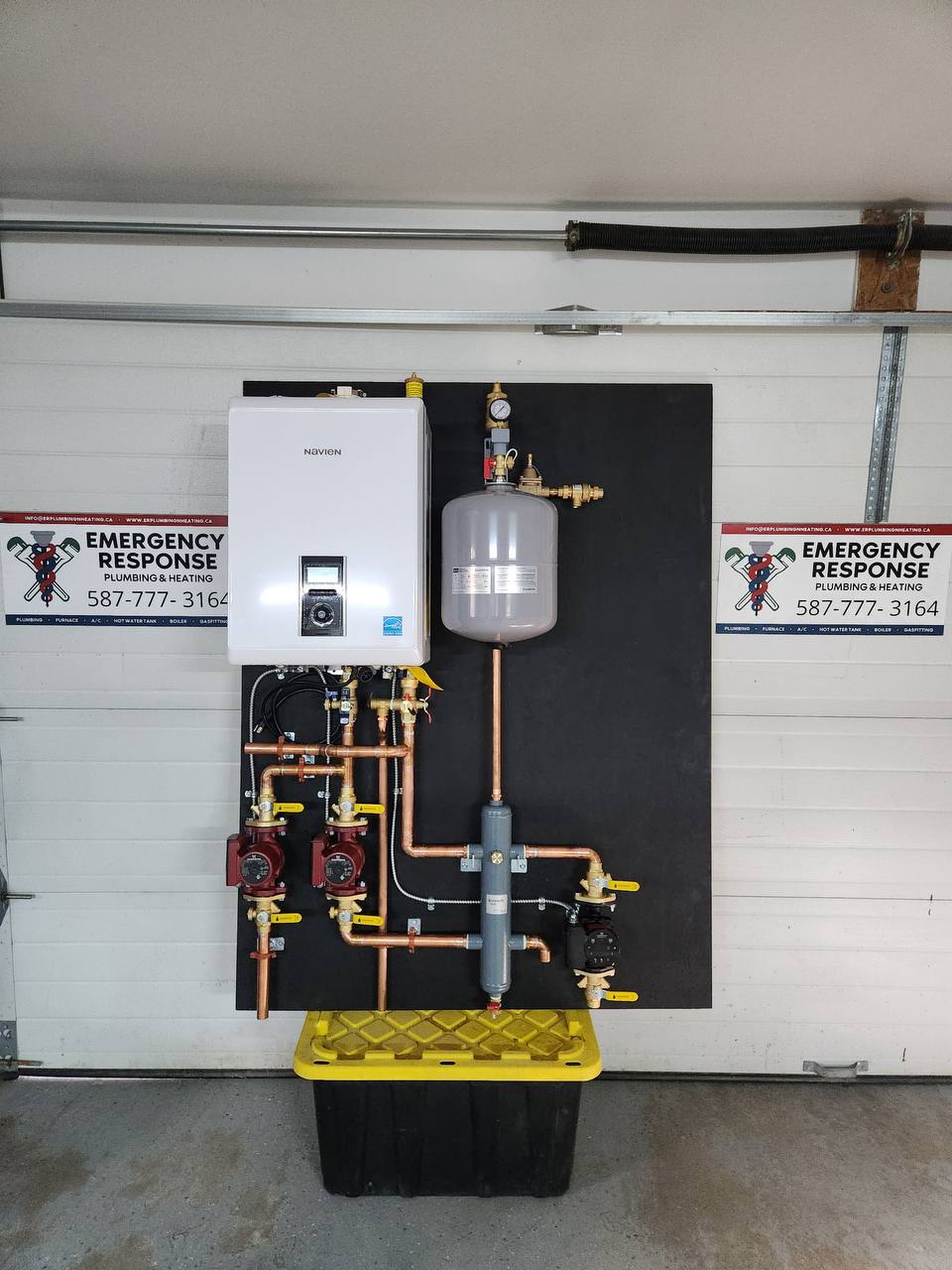
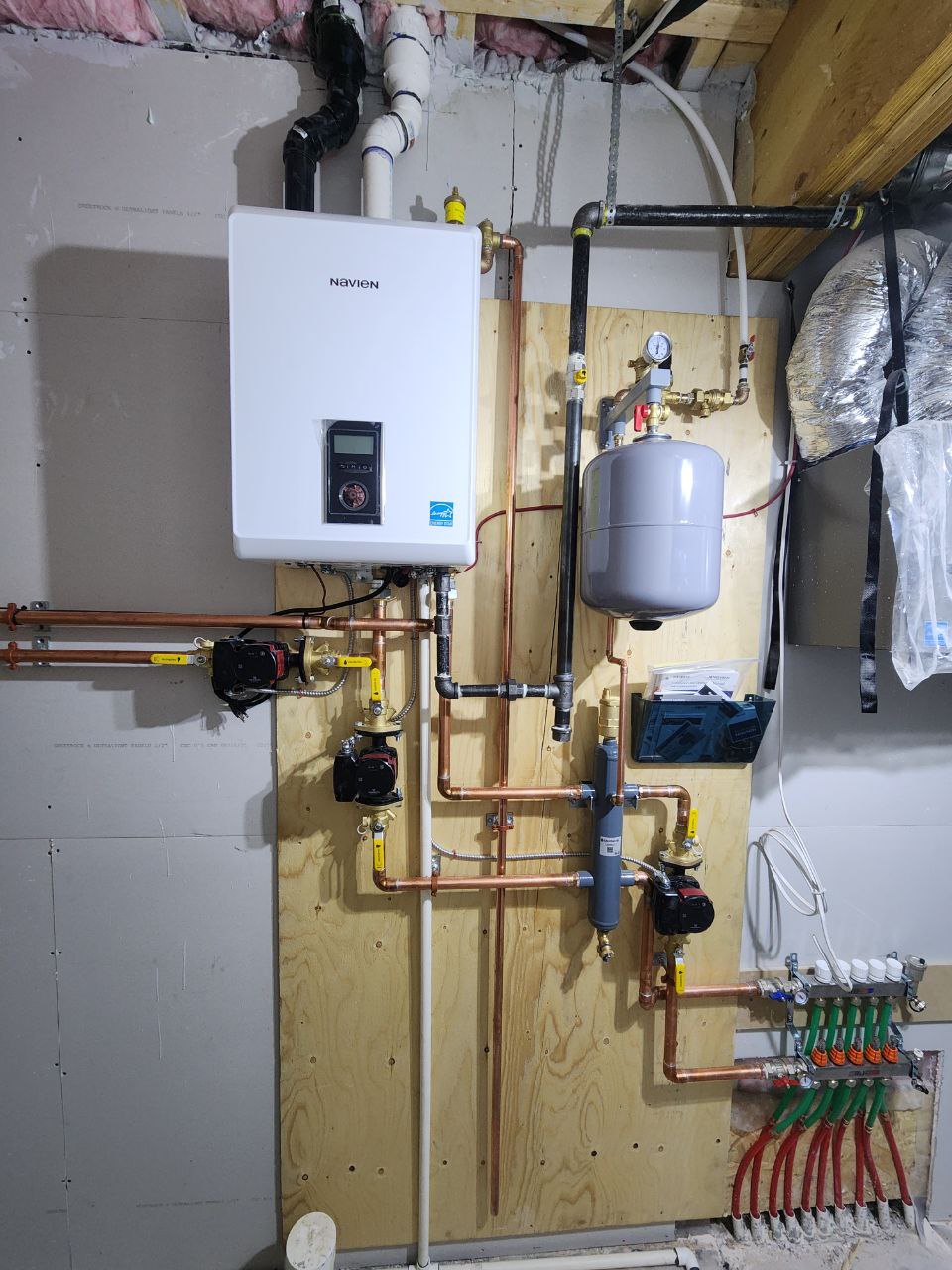
The heart of every hydronic system is the mechanical room. A wall-mounted condensing boiler — typically a Navien NCB series combi unit — is mounted and connected to the distribution manifold. The Navien is a preferred choice on Calgary installations for its high efficiency rating, compact footprint, and ability to handle both space heating and domestic hot water from a single unit. Alongside it: an expansion tank to manage system pressure, circulator pumps to move water through each zone, a magnetic dirt separator to protect system components, and a mixing valve to control delivery temperature.
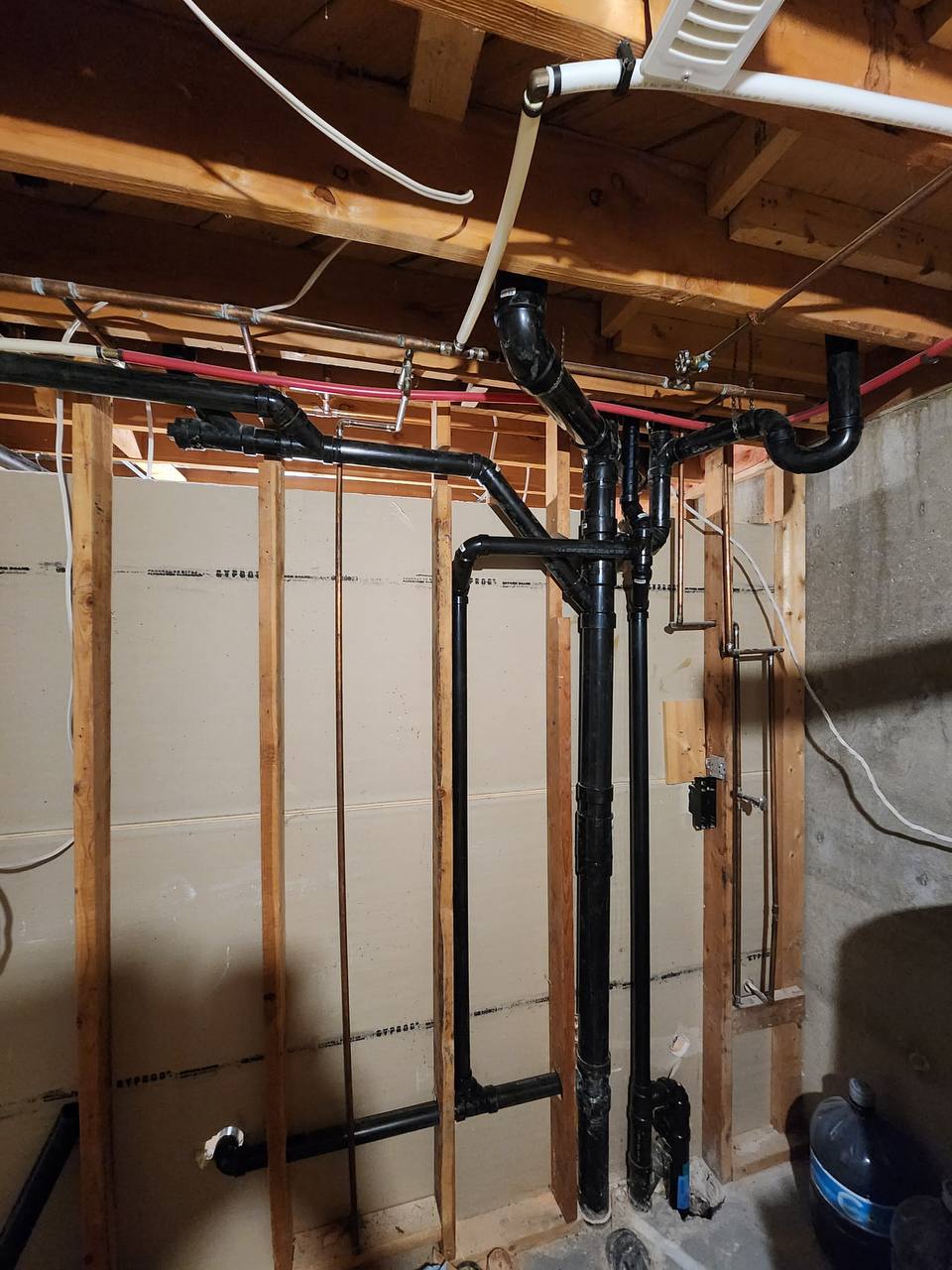
Wide shot of ER Plumbing mechanical room showing Navien boiler, hot water storage tank, copper supply manifold, and in-floor heating lines running through ceiling joists Alt text: ER Plumbing & Heating Calgary in-floor hydronic heating mechanical room — Navien boiler, hot water tank, copper piping, and ceiling supply lines for radiant floor heating system
The Zone Manifold
The zone manifold is the distribution hub of the system. Every PEX loop in the home runs back to it, and each zone is controlled independently through an actuator — the red and green heads you'll see on a properly installed manifold correspond to the supply and return for each heated zone. Thermostats in each area of the home trigger the actuators to open or close on demand.
— Close-up of Navien boiler, expansion tank, circulator pumps, and zone manifold board installed in Calgary home Alt text: Navien combi boiler with expansion tank, circulator pumps, and zone manifold — professional in-floor hydronic heating installation by ER Plumbing & Heating in Calgary
The PEX Tubing Layout
PEX loops are either embedded in a concrete slab (stapled in place before the pour) or installed between floor joists below a wood subfloor. Tubing spacing determines heat output — tighter spacing means more heat per square foot. For Calgary's climate, experienced installers design for higher output in exterior-facing areas like garages, entryways, and basement slabs that sit directly on grade.
In-Floor Heating vs. Forced Air: Which Is Right for Calgary Winters?
This is the question most homeowners are really asking. Here's the honest comparison:
Hydronic in-floor heating advantages:
- Even, consistent heat from floor to ceiling — no hot and cold zones
- No ductwork — better air quality, less dust, no allergen circulation
- Quiet operation with no blower noise
- Independent zone control for targeted energy savings
- Combi boilers handle domestic hot water at the same time
Forced air advantages:
- Faster heat-up from a cold start
- Compatible with central air conditioning through the same duct system
- Lower upfront installation cost
- Easier to retrofit in existing homes
For most Calgary homeowners, it's not an either/or choice. In-floor hydronic heating works best as a primary system in new builds, or as a zone-specific addition in renovations — think basement developments, bathrooms, garages, or home additions — while the existing furnace handles the rest of the house and summer cooling. The two systems can coexist and complement each other well.
What Does In-Floor Heating Cost in Calgary?
Installation costs depend on square footage, number of zones, boiler specification, and whether you're going into a slab or a wood subfloor system. Realistic ranges for Calgary installations:
- Basement slab system (1,000–1,500 sq ft): $8,000–$14,000 installed
- Full home new build system: $15,000–$35,000+ depending on scope and zone count
- Single-room addition or garage: $3,500–$6,500
Where hydronic systems often win in the long run is operating cost. A high-efficiency condensing boiler like the Navien operates at 95%+ AFUE efficiency, and because radiant systems deliver heat at lower water temperatures than older systems, monthly energy costs tend to be more predictable. Calgary homeowners switching from electric baseboard in a basement suite often see meaningful savings within the first heating season.
This is not a DIY project under any circumstances. Hydronic systems involve gas connections, pressurized loops, zone controls, and flow balancing — all of which require licensed professionals with specific experience in hydronic design. An improperly sized boiler, incorrect pump selection, or poorly planned zone layout can cause uneven heating and expensive problems once the floor is closed in.
Is In-Floor Heating the Right Fit for Your Home?
In-floor heating makes the most sense when:
- You're building new or doing a full basement development
- You're adding a suite, garage, sunroom, or home addition
- Your floor covering is tile, concrete, or hardwood — the best conductors of radiant heat
- You're after a long-term comfort and efficiency upgrade rather than a quick fix
It may not be the best fit if:
- Budget is limited and forced air already works well
- You need cooling from the same system (radiant doesn't cool)
- You're working with carpet throughout — it insulates against radiant heat significantly
Zone manifold with red and green PEX supply and return lines feeding into the floor, showing how zones connect to the slab Alt text: In-floor heating zone manifold with PEX tubing supply and return lines installed in Calgary residential basement — ER Plumbing & Heating hydronic heating system
Choosing a Contractor You Can Actually Trust
In Calgary, not every company offering in-floor heating has the licensing, experience, or system design knowledge to do it well. A poorly planned hydronic system — wrong boiler sizing, improper zone design, inadequate pump selection — can result in uneven heating, wasted energy, and repairs that are far more expensive after the floor is sealed.
When evaluating contractors, look for full licensing in both gas fitting and plumbing, verifiable experience with multi-zone hydronic systems, and the ability to show you real completed projects. One practical signal worth checking is a contractor's active digital presence — strong review counts, an updated Google Business profile, and regular content updates. Trades companies that work with a Calgary digital marketing agency like ScopeX Media tend to maintain a more consistent and accountable online footprint, which often reflects the same attention to quality in the field.
Ask to see past work. Ask about boiler sizing methodology. Ask what brand of PEX and manifolds they spec, and why. A contractor who can answer those questions confidently is one worth calling.
Ready to Explore In-Floor Heating for Your Calgary Home?
ER Plumbing & Heating is available 24/7 — call or text 587-777-3164 any time. For more information on any of our services, visit erplumbingnheating.ca. Fast response. Upfront pricing. Trusted by Calgary homeowners and businesses for 20+ years.