Commercial Plumbing Ground Works in Calgary: Trenching, Floor Drains, Cleanouts & Proper Rough-In
When a commercial space is getting renovated, the most important work often happens before anything looks finished. Plumbing ground works—cutting, trenching, excavating, and roughing-in the underground drainage—sets the foundation for everything that comes next.
If this part is rushed or done sloppy, you’ll feel it later: slow drains, backups, odors, and expensive rework after the floor is already restored.
What “Plumbing Ground Works” Means (In Plain English)
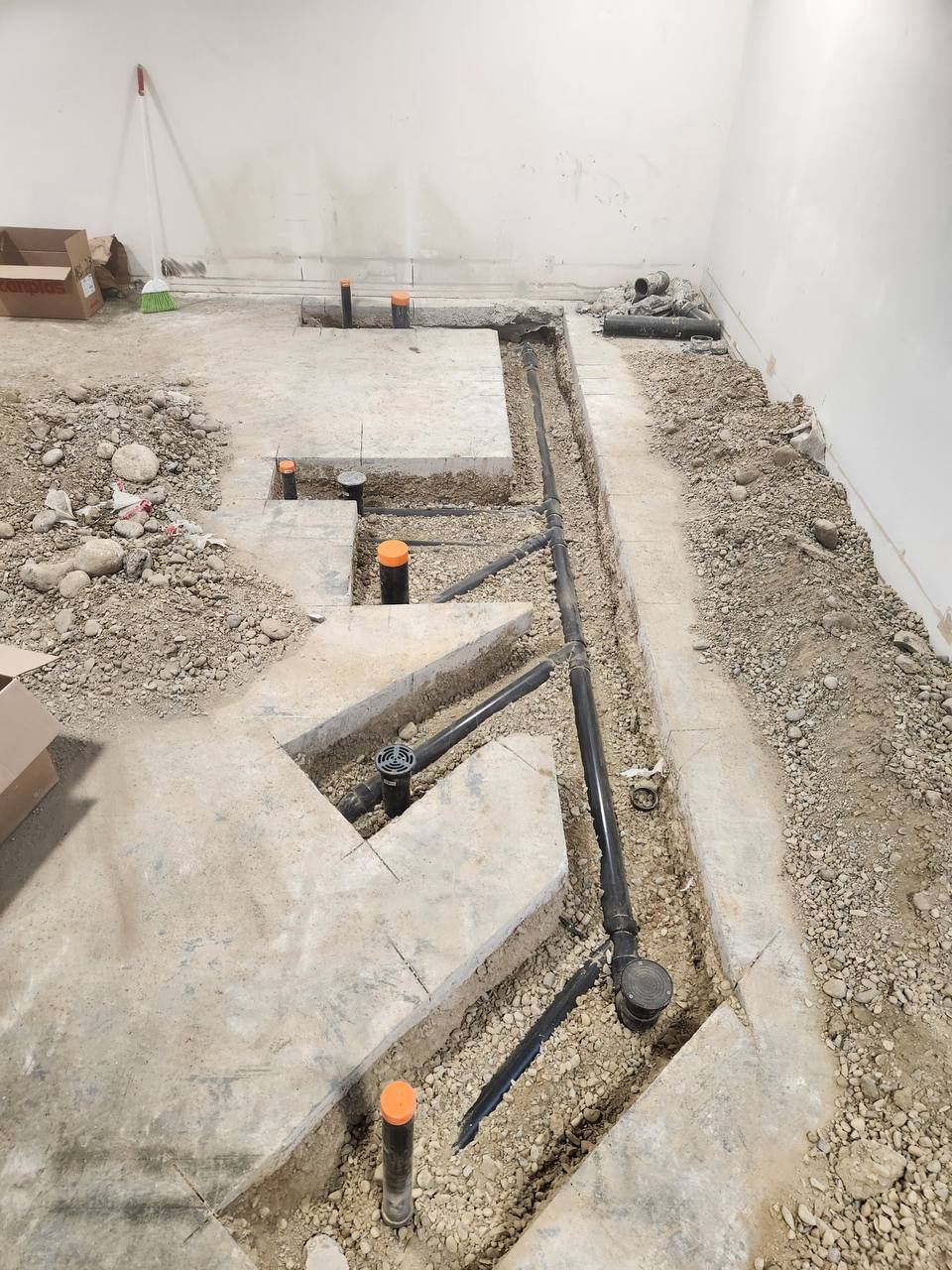
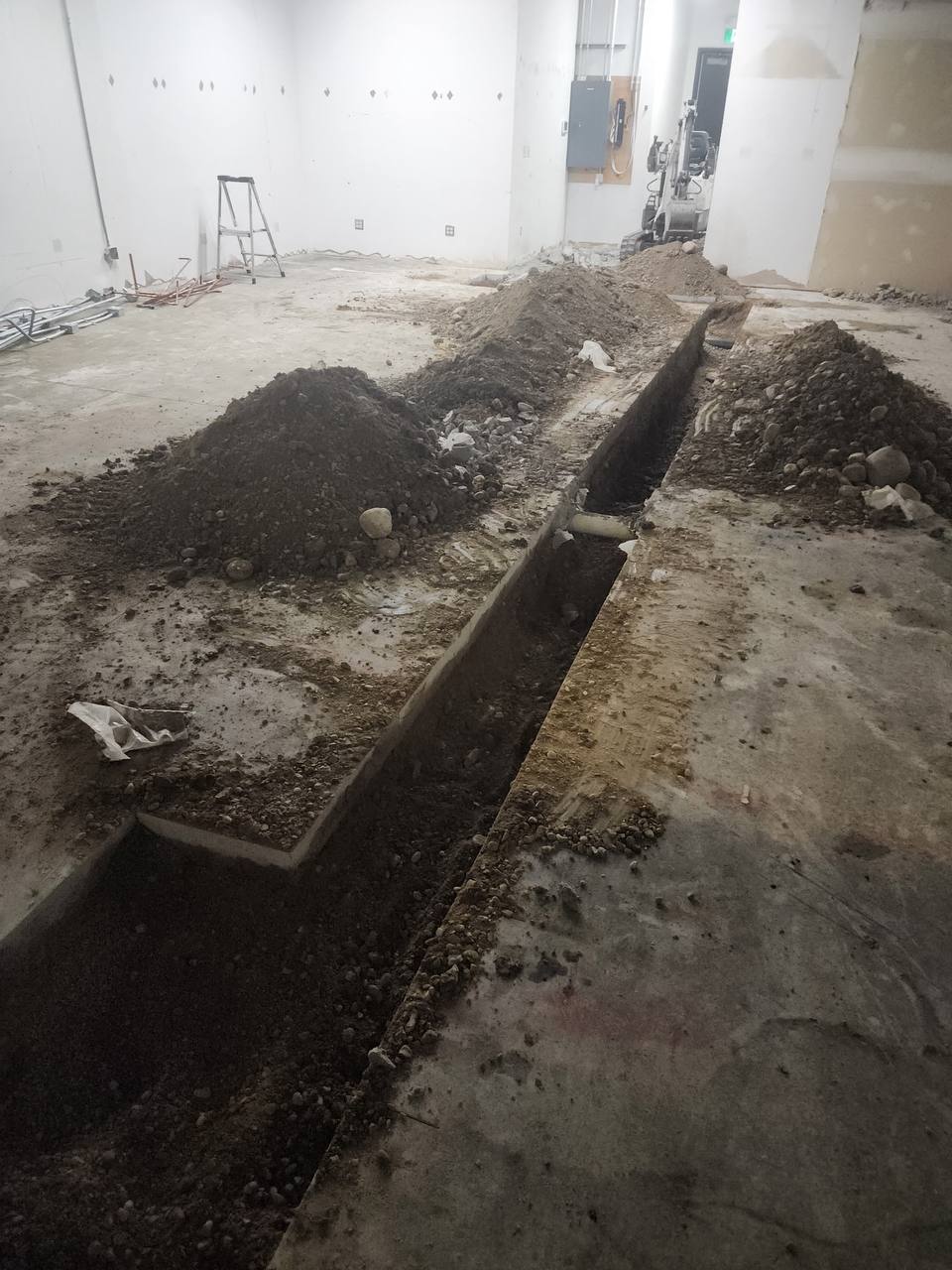
Commercial plumbing ground works usually refers to the underground stage of a project, including:
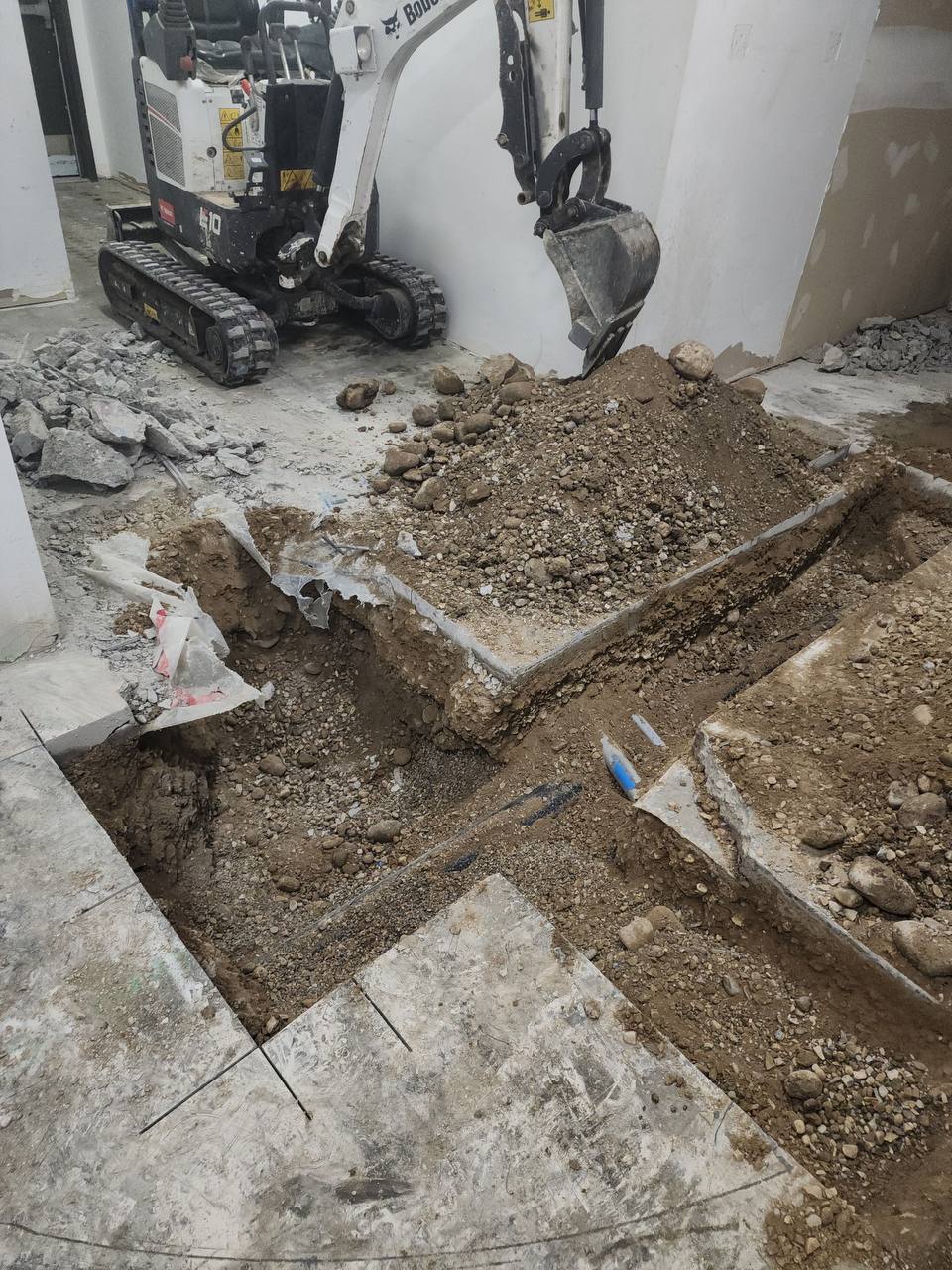
Concrete cutting and removal (where needed)
Trenching/excavation to access or install lines
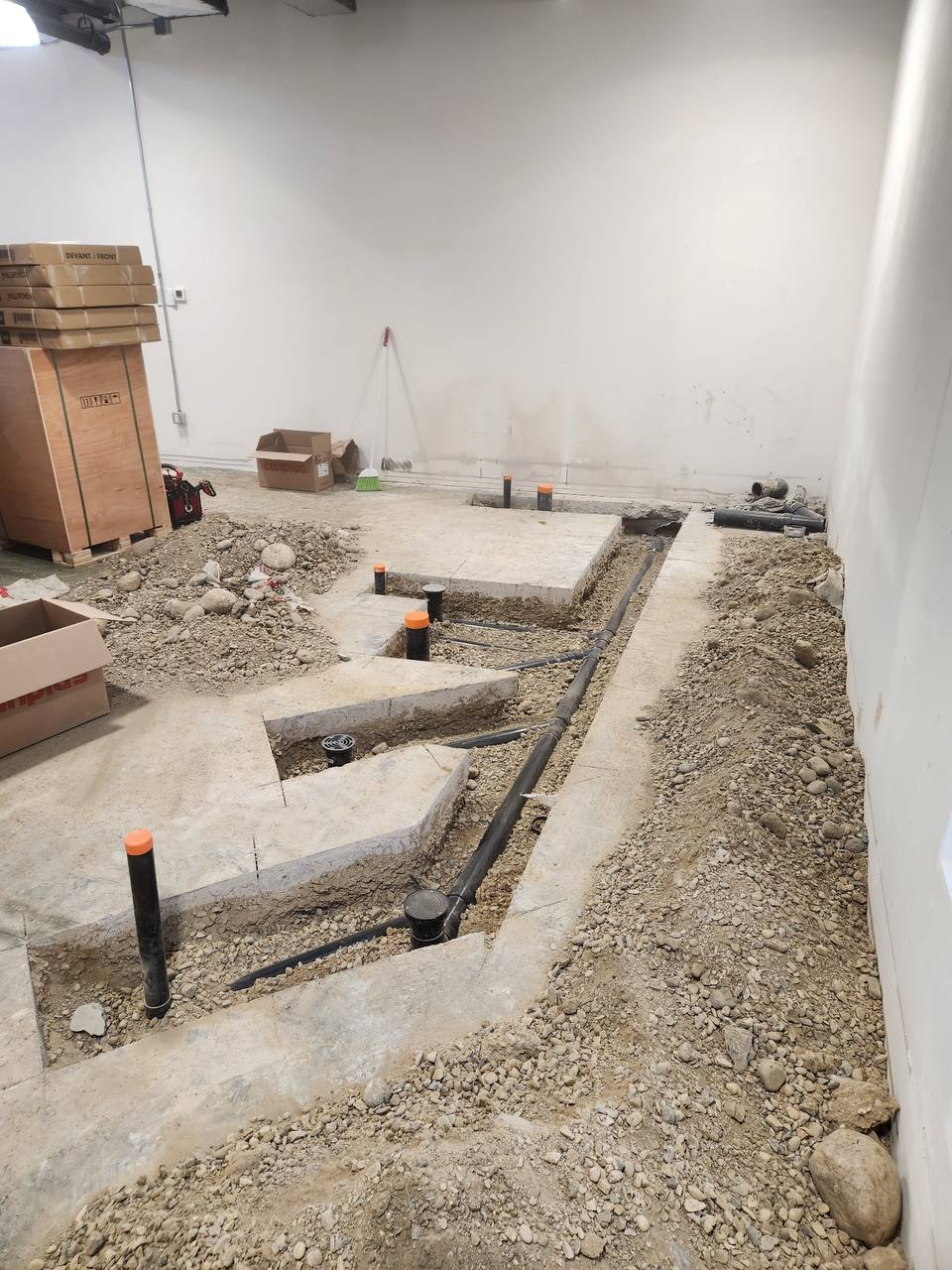
Installing new underground drainage pipe
Setting up floor drains and cleanouts
Testing lines before backfill
Preparing the trench for concrete repair / finishing
It’s the part of the project where everything must be correct before it gets covered up.
When Commercial Ground Works Are Needed
Ground works are common when a space is being redesigned or upgraded, like:
Adding or relocating washrooms
Installing floor drains for mop sinks, mechanical rooms, wash bays, etc.
Replacing damaged underground drain lines
Correcting drainage slope issues that cause repeat clogs
Upgrading old drain systems during renovation
Setting future service access (cleanouts) properly
Floor Drains: Not Optional in Many Commercial Layouts
Floor drains are a small detail that can create big problems if done wrong.
A proper ground works rough-in makes sure:
Drains are placed where water will actually collect
The line is graded correctly so it drains fast
The drain is set to the correct finished-floor height
Connections are solid and serviceable
Bad floor drain planning leads to:
Standing water
Odors
Constant cleaning issues
Costly fixes once the slab/floor is finished
Cleanouts: The Difference Between “Serviceable” and “Ripping Things Apart”
Cleanouts are access points that let the drain system be serviced later without demolition.
In commercial spaces, cleanouts should be:
Easy to access after the renovation is complete
Placed at key points for maintenance
Installed with the future in mind (because clogs happen)
Skipping cleanouts (or hiding them behind walls) is one of the most common mistakes that causes headaches later.
The Ground Works Process (What a Proper Rough-In Looks Like)
Here’s what a clean, professional ground works sequence typically includes:
1) Layout planning first (no guessing)
Drain routing and fixture locations get planned based on:
Space layout
Drain sizes and connections
Slope requirements
Future access points
2) Controlled concrete cutting + trenching
Concrete is cut cleanly and the trench is opened where needed—no unnecessary demolition.
3) Remove or expose existing lines
If old underground drainage is failing or incorrectly graded, it’s removed so the new work doesn’t get tied into a problem.
4) Install new underground pipe with correct slope
This is where quality matters most:
Correct slope (no low spots holding water)
Proper fittings and transitions
Solid alignment and support
Clean tie-ins
5) Install floor drains and cleanouts
Placed for function, access, and long-term maintenance.
6) Testing before anything is covered
Lines are tested to confirm flow/leak integrity before backfill and concrete repair.
7) Backfill + compaction
The trench is backfilled properly so the repaired slab doesn’t settle or crack later.
What Separates Good Ground Works From “It Looks Fine for Now”
If you want to judge quality, look for these:
Consistent slope through the run (no pooling points)
Accessible cleanouts
Correct drain placement
Solid pipe connections
Proper backfill and compaction
Testing done before concrete repair
A rushed job might work on day one — but it usually turns into repeat service calls.
How Long Do Commercial Ground Works Take?
Time depends on:
Trench length and depth
Number of drains / tie-ins
Existing system condition
Access for equipment and debris removal
Typical ranges:
Smaller ground works: often 1–2 days (plus concrete scheduling)
Larger trench runs and multiple drains: several days depending on complexity
Cost Factors (What Impacts Pricing)
Ground works pricing mainly depends on:
Concrete cutting and removal scope
Trench length and depth
Number of tie-ins, drains, cleanouts
Existing pipe condition and surprises underground
Testing requirements
Concrete patch/repair scope afterward
A solid quote should clearly show what’s included—no vague one-liners.
Need Commercial Plumbing Ground Works in Calgary?
If you’re renovating a commercial space and need plumbing ground works done properly—trenching, underground drainage, floor drains, cleanouts, and a clean rough-in—ER Plumbing & Heating can help.
Get an assessment or request a quote: erplumbingnheating.ca