
Commercial Plumbing Ground Works in Calgary: From Trenching to a Finished Rough-In (Floor Drains, Cleanouts + Tankless)
Commercial plumbing projects don’t “start” when fixtures go in. They start underground—ground works—and they’re only done right when the finished rough-in matches the plan: correct drainage, cleanouts you can actually access later, and clean waterline routing that’s ready for inspections and wall closure.
Below is what a proper start-to-finish sequence looks like on a commercial build in Calgary.
What Counts as “Commercial Plumbing Ground Works”?
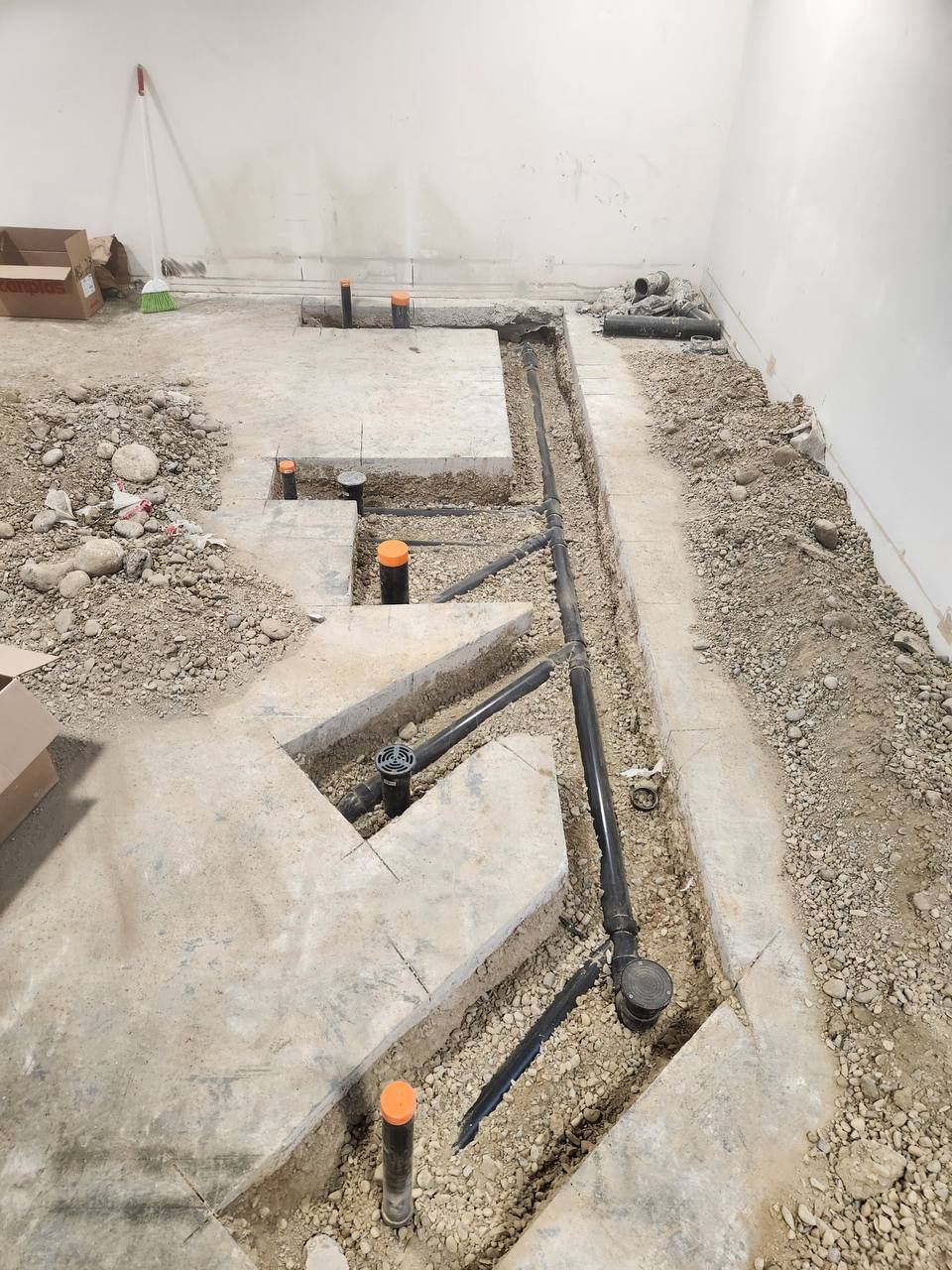
Plumbing ground works typically includes everything required to build (or rebuild) the drainage system before floors get patched and walls get closed, such as:
Concrete cutting + controlled trenching
Underground drain line installation/replacement
Floor drains and cleanouts set in the right spots
Testing before backfill
Prep for concrete repair / slab patch
Once that’s done, the project moves into the rough-in stage above the floor: framing penetrations, water distribution, equipment connections (like a tankless unit), and final tie-ins.
Why Ground Works Matter More Than the “Pretty Finish”
If the underground portion is wrong, the finished space suffers. The most common long-term problems come from:
Bad slope (water doesn’t move properly → buildup → repeat clogs)
Missing or buried cleanouts (future service requires demolition)
Floor drains set poorly (standing water, odor issues, constant cleanup)
Rushed backfill/compaction (slab settling/cracking later)
Doing it properly once is cheaper than opening concrete twice.
The Ground Works Checklist (What “Done Right” Looks Like)
1) Layout planned before cutting
Commercial spaces change constantly—washrooms move, mop sinks get added, equipment locations shift. Proper work starts with a layout that accounts for:
Fixture locations
Drain sizes
Routing and slope
Where service access will be needed later
2) Controlled cutting + trenching
Concrete is cut cleanly so trenching is targeted—not random demolition.
3) Underground drain lines installed with proper fall
This is where quality shows. A correct install has:
Consistent slope
Correct fittings
Solid alignment
Proper transitions between materials (if tying into existing systems)
4) Floor drains + cleanouts installed with intention
Floor drains go where they’ll actually be used (not just “where it fits”)
Cleanouts go where future service is realistic (not hidden behind finished walls)
5) Testing before cover-up
If it’s not tested before it’s buried, it’s gambling. Testing protects the owner and the build schedule.
6) Backfill + compaction done properly
Loose backfill is one of the fastest ways to get slab movement and cracking later.
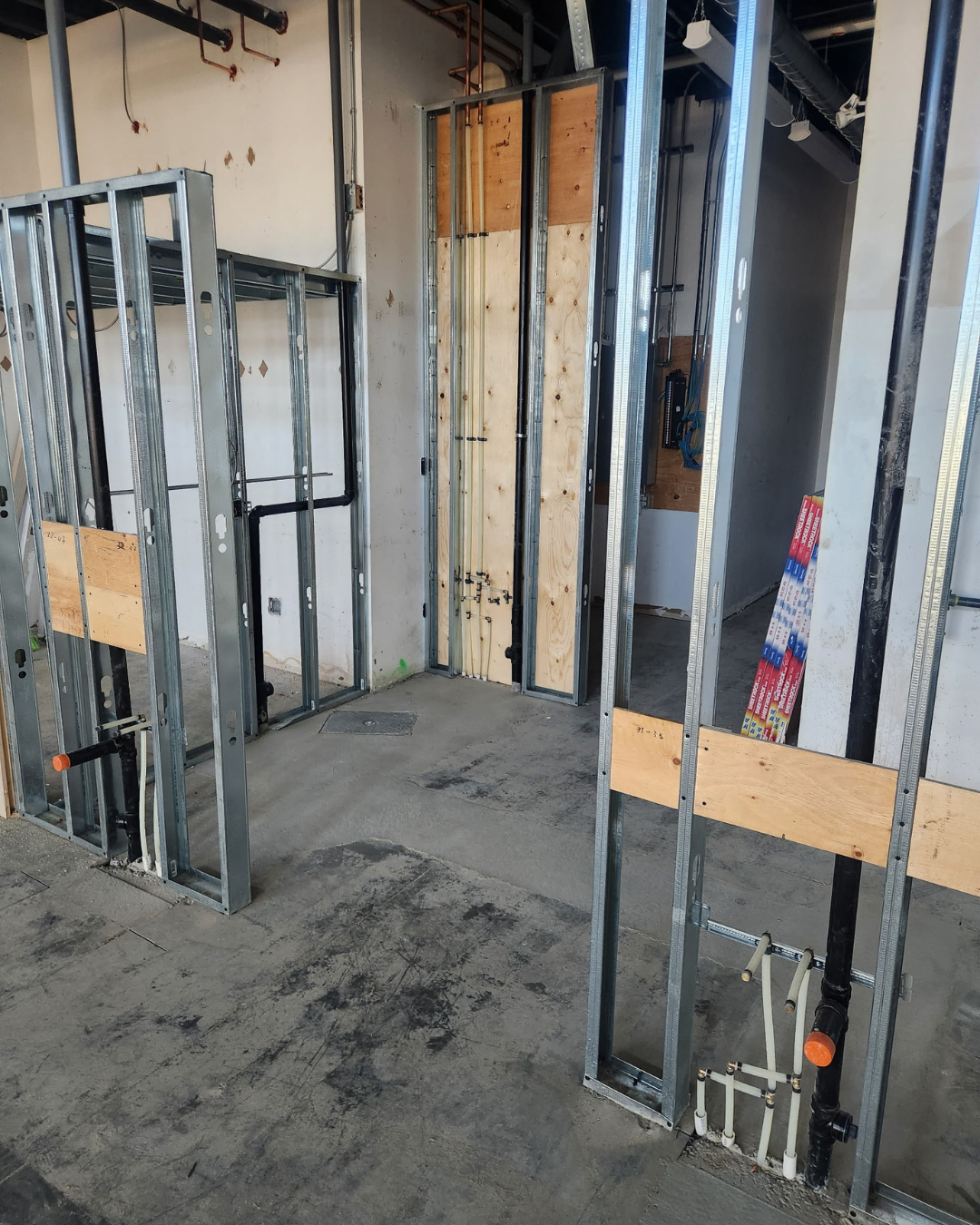
Moving From Ground Works to Rough-In (The “Finished” Stage You’re Showing)
Once the underground is correct, the build can transition into the visible mechanical work:
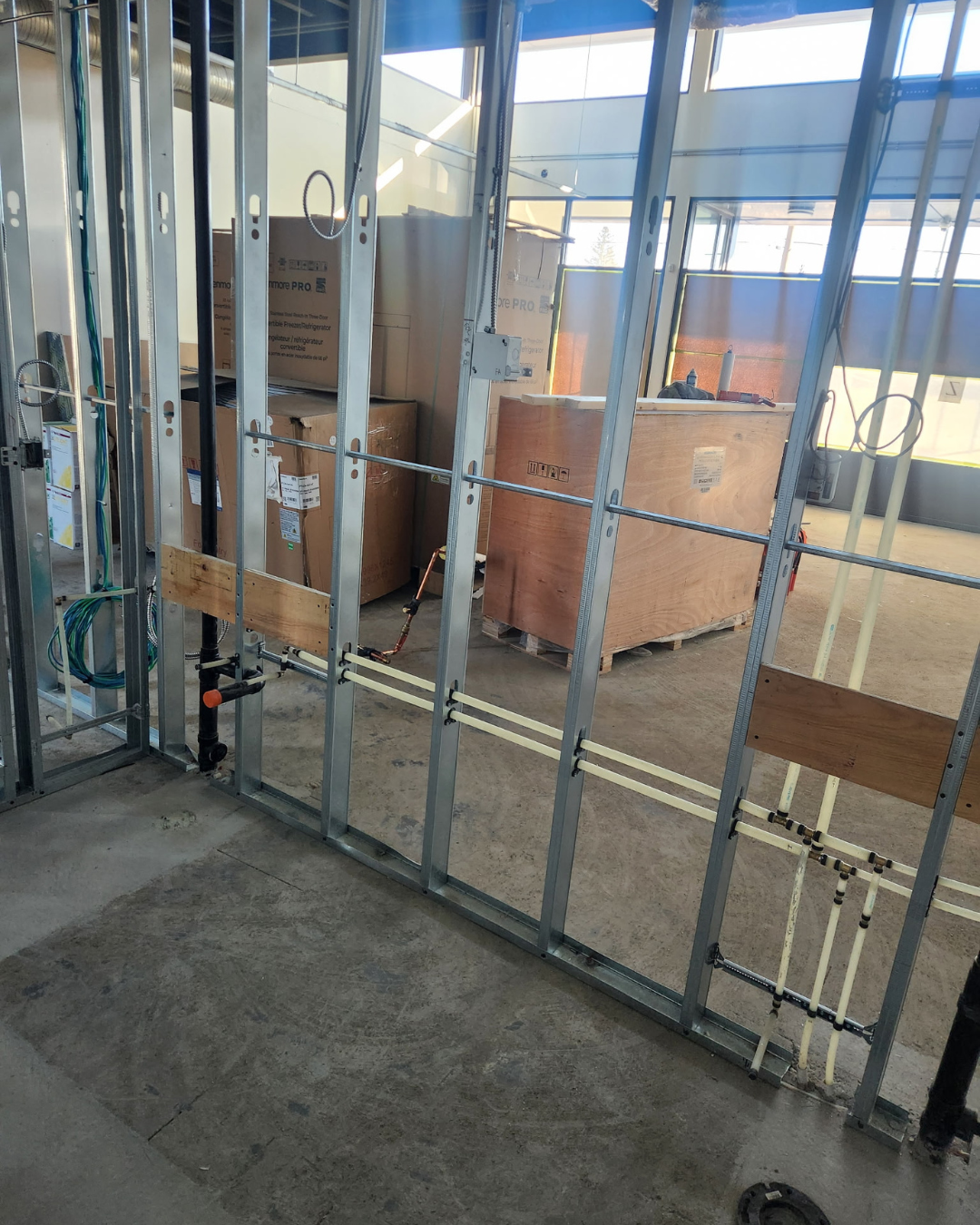
Framing + Plumbing Tie-Ins
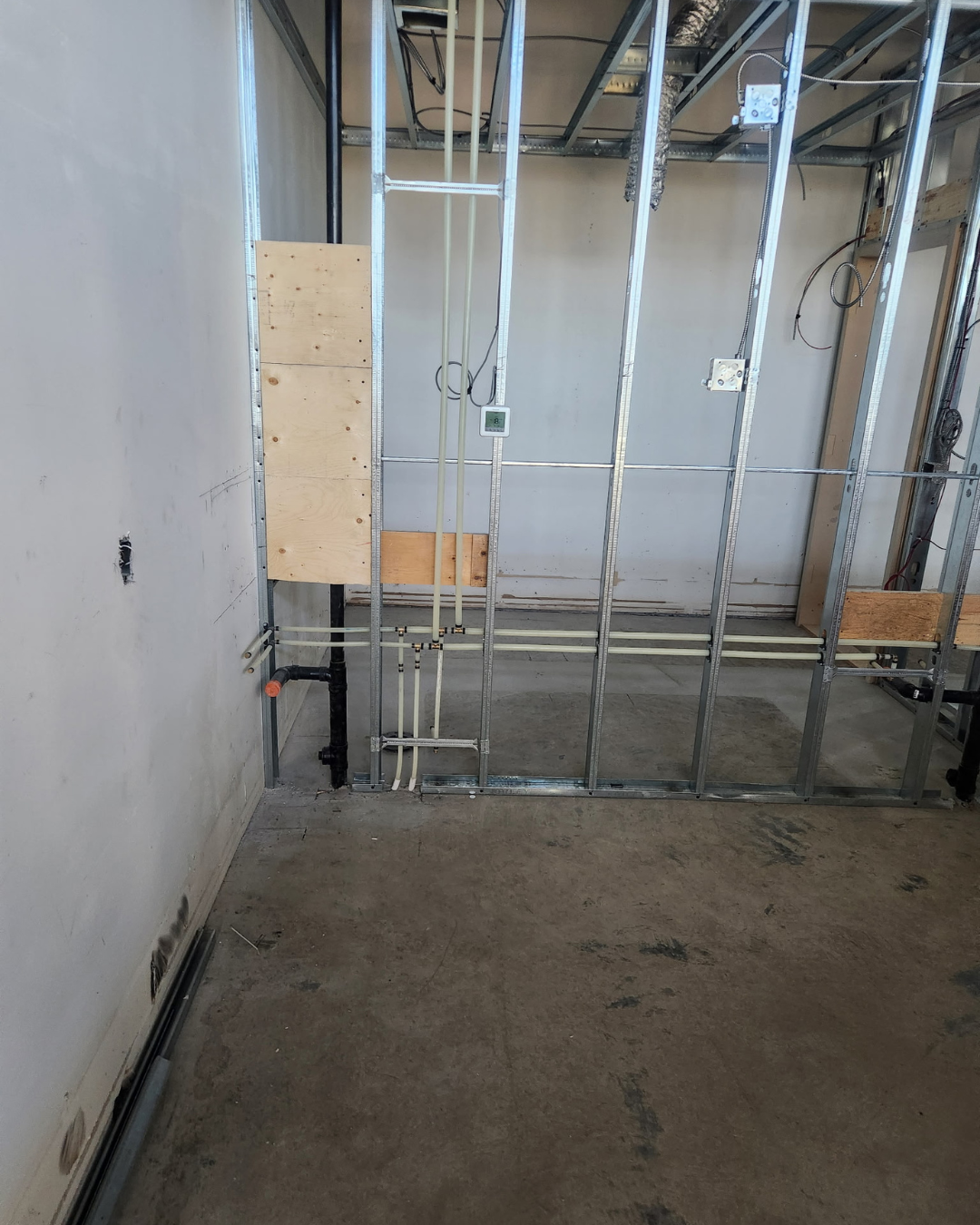
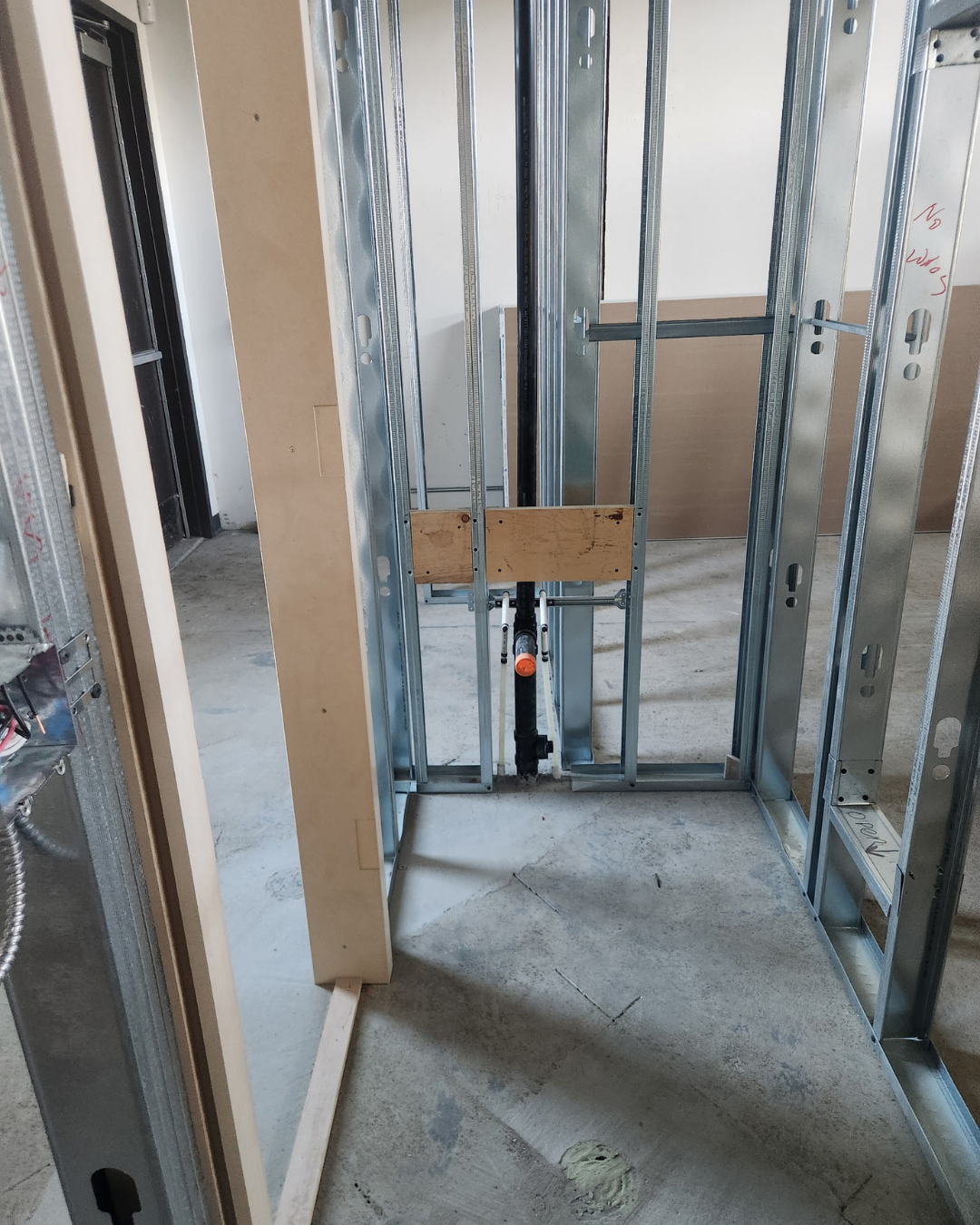
You’ll typically see:
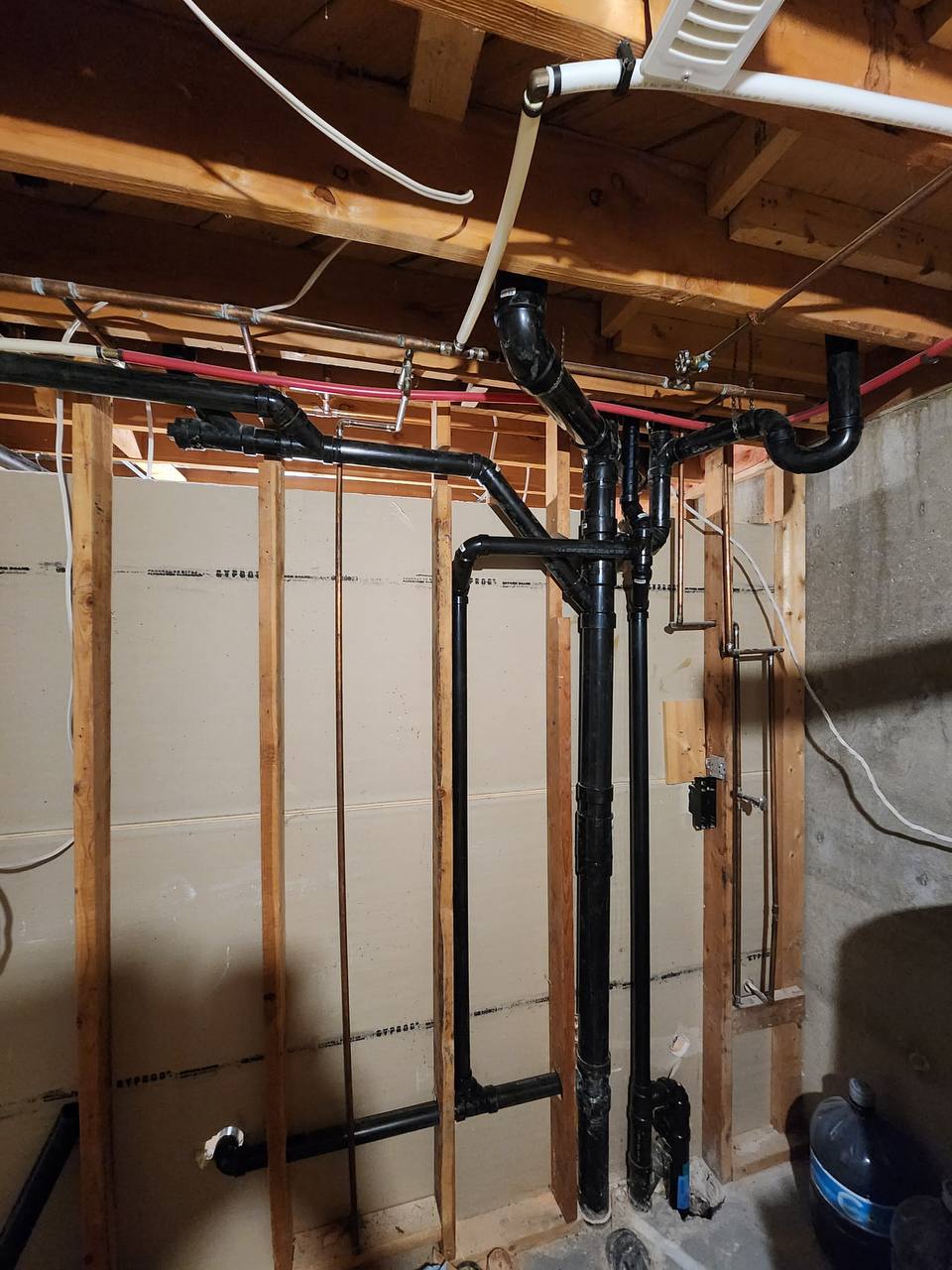
Drain stacks positioned in stud walls
Waterlines routed cleanly across bays
Blocking/plates for protection and future fixture mounting
Clear access points kept accessible for later service
INSERT IMAGE HERE (Stud wall rough-in showing drain stack + waterlines)
Clean Water Distribution: Why Routing Matters
In a commercial rough-in, waterline routing isn’t just about “getting water there.” It’s about:
Minimizing unnecessary joints
Keeping lines protected in walls
Maintaining clean runs for easier inspection
Positioning shutoffs and connections logically
Good rough-in work makes finishing faster and reduces future leak risk.
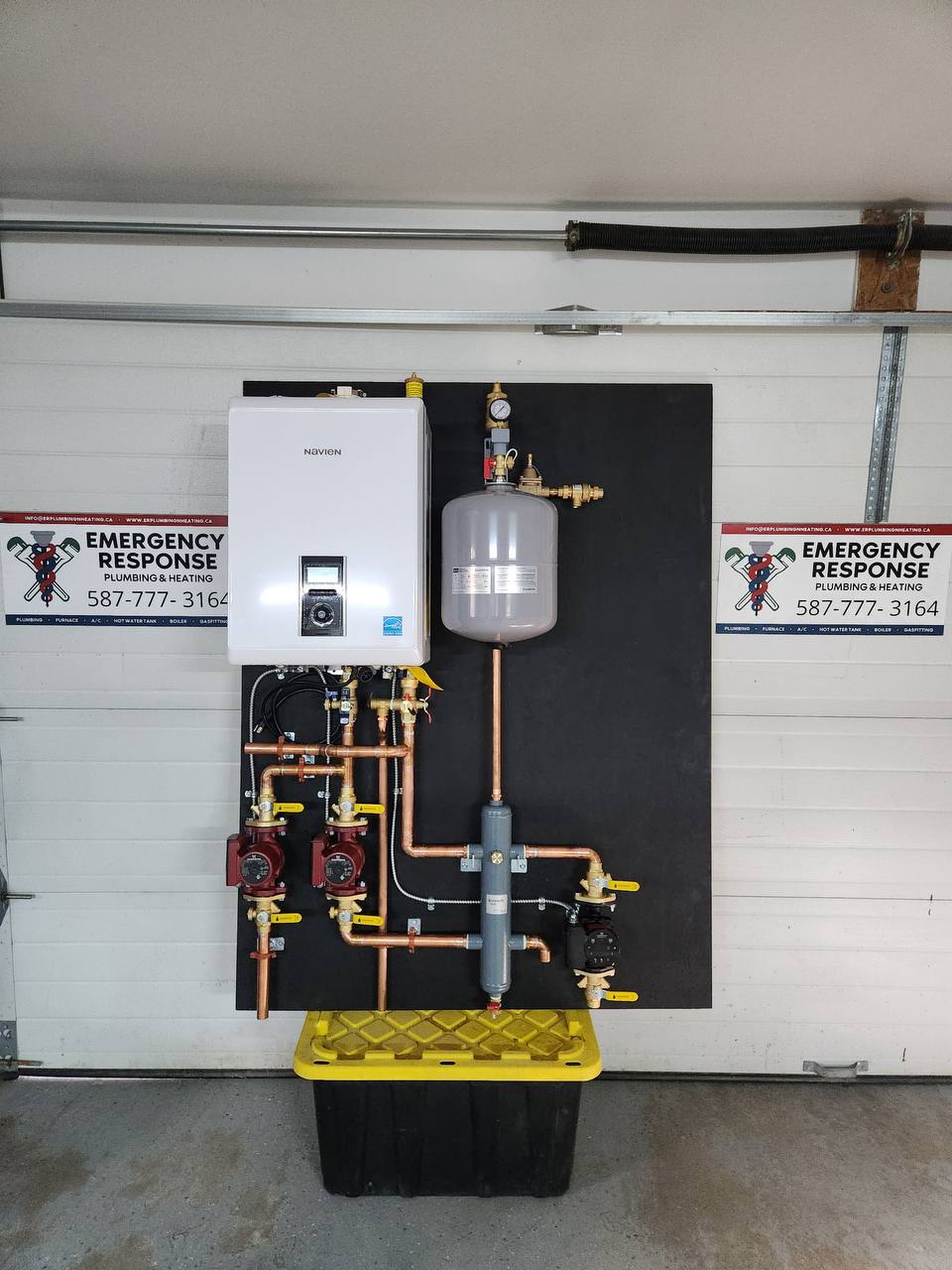
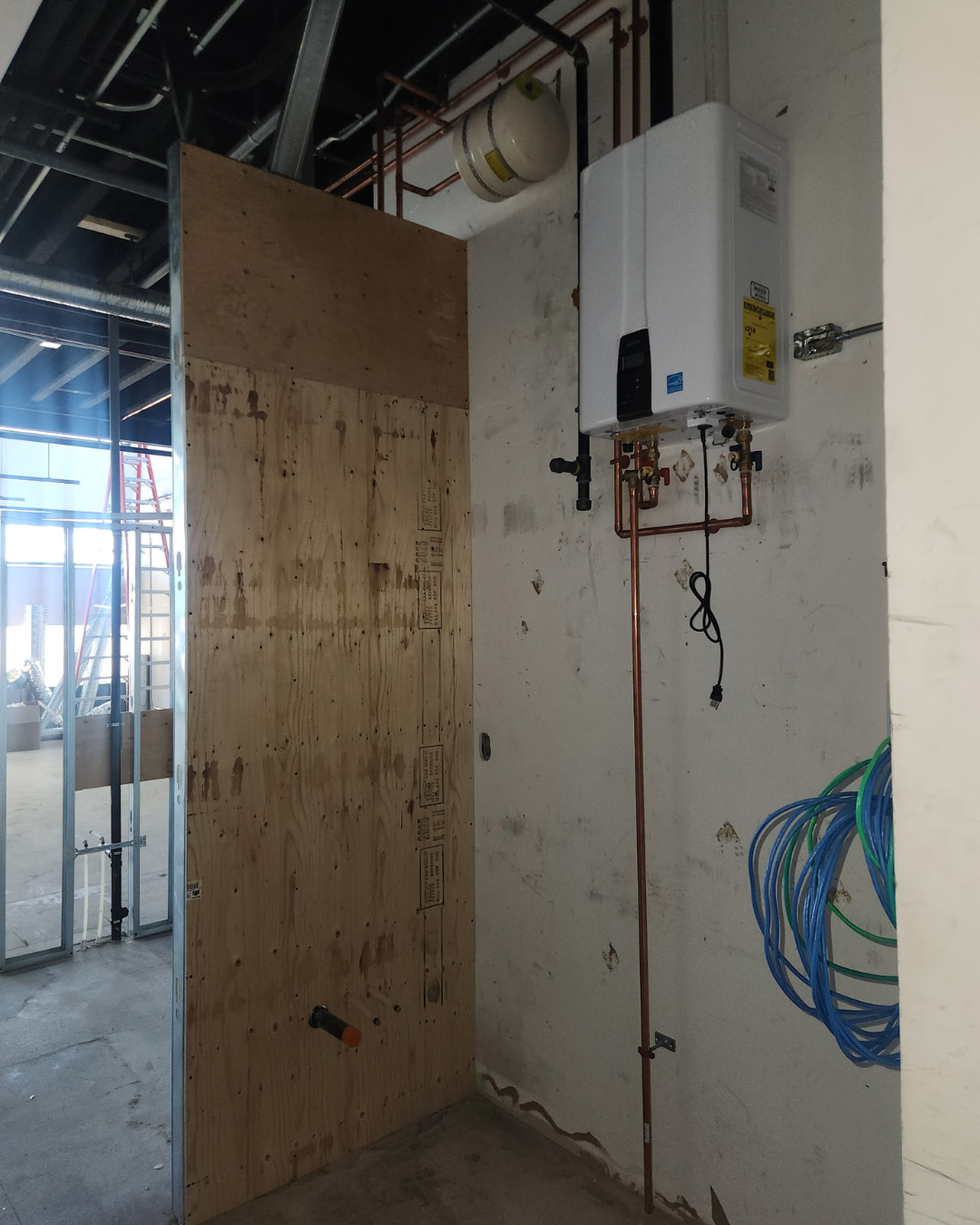
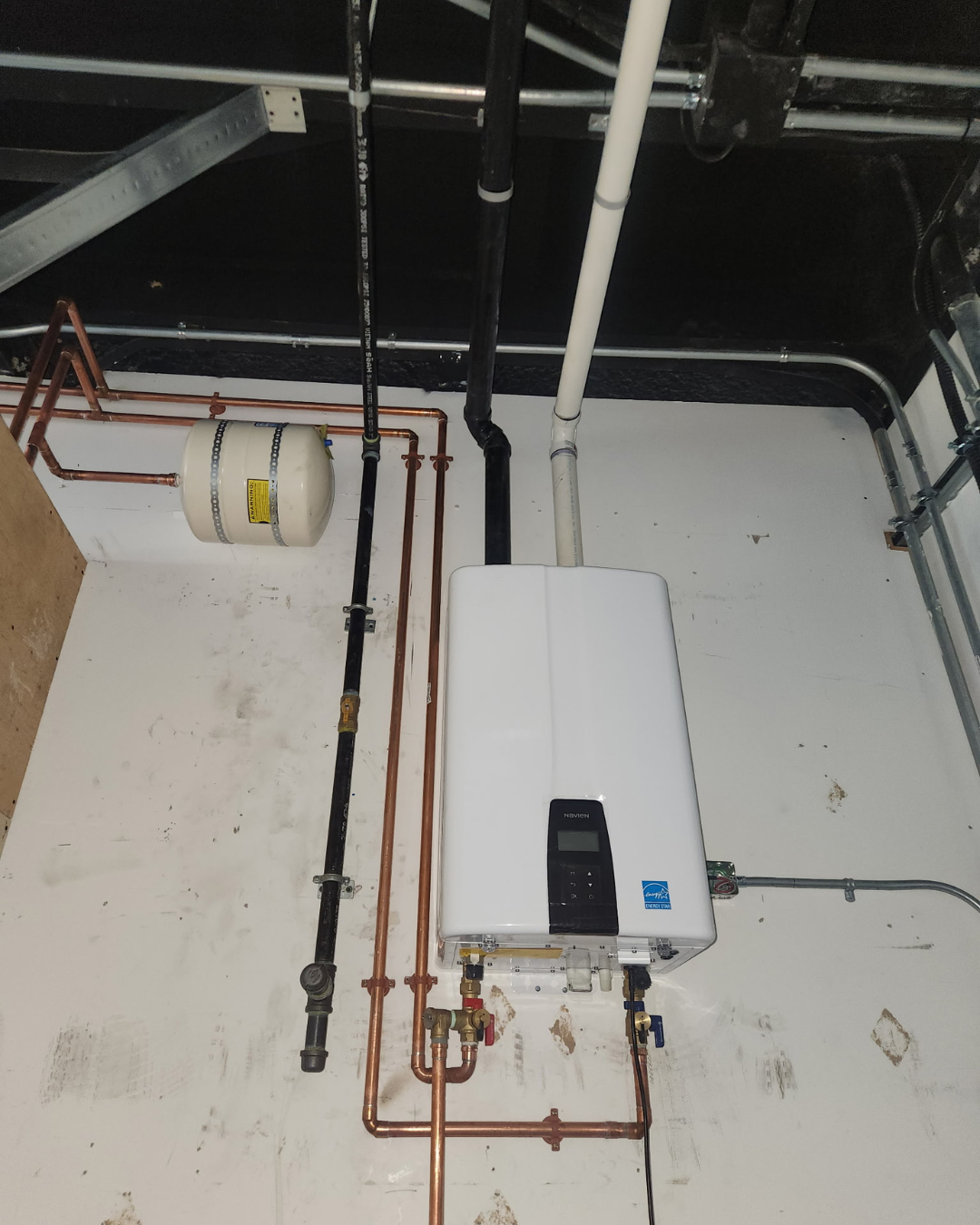
Tankless Water Heater Install: The Final “Proof” the Rough-In Was Planned Right
When a tankless unit is installed cleanly, it usually means the rough-in planning was solid. A proper commercial tankless setup typically includes:
Correct water connections (hot/cold isolation where applicable)
Proper venting path (intake/exhaust depending on model)
Secure mounting and tidy pipework
Gas and condensate considerations handled correctly (where required)
Serviceability: the unit can be maintained without tearing the wall apart
What This Means for a Commercial Renovation in Calgary
If you’re renovating a commercial space in Calgary or surrounding areas, plumbing ground works and rough-in should be treated like a “one-shot” stage:
Plan it properly
Install it cleanly
Test it before it’s covered
Keep service access realistic
Build it so the next trades can move fast
That’s how you avoid repeat callbacks, delays, and surprise slab rework.
Need Commercial Plumbing Ground Works + Rough-In Done Properly?
If you don’t have time to babysit a trenching + rough-in schedule or you want it done cleanly from day one, ER Plumbing & Heating can help with commercial ground works, drainage rough-ins, floor drains, cleanouts, and equipment installs.
🌐 erplumbingnheating.ca